What test and tag involves
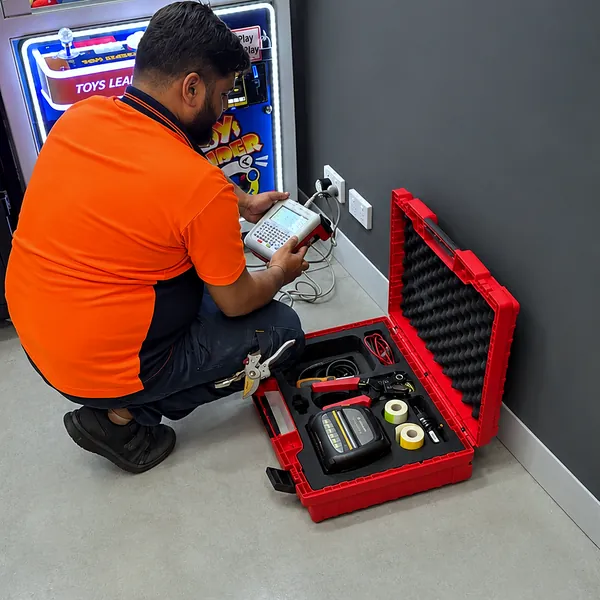
Test and tag is the routine inspection and testing of portable electrical equipment: anything that plugs into a power point, such as power tools, extension leads, power boards, kitchen appliances, computers and cleaning machines. Each item is checked by eye, tested with a portable appliance tester, and fitted with a tag that shows who tested it, when, the result and when it is next due.
The aim is simple. Cords get crushed, plugs get pulled by the lead and casings crack. Regular testing finds the damage before it gives someone an electric shock or starts a fire.
How often equipment must be tested
| Workplace or equipment | How often | Source |
|---|---|---|
| Construction sites | Every 3 months | SafeWork SA |
| Manufacturing | Every 6 months | SafeWork SA |
| Commercial cleaning | Every 6 months | SafeWork SA |
| Other hostile environments | At least every 12 months | SafeWork SA |
| Hire equipment | At each hire, and every 3 months | SafeWork SA |
| Residential type areas, such as hotels, motels, hostels and boarding houses | Every 2 years | SafeWork SA |
| Equipment not flexed in normal use, not open to abuse and not in a hostile environment | Every 5 years | SafeWork SA |
A “hostile environment” is one where normal use exposes equipment to conditions likely to damage it, such as moisture, heat, vibration, corrosive chemicals, dust or rough handling. Commercial kitchens, workshops, warehouses and outdoor work often fall into this group. If you are unsure which row fits your workplace, we can help you work it out on the first visit.
The rules in South Australia
The Work Health and Safety Regulations 2012 (SA) set the legal duties, and SafeWork SA publishes the intervals.
- Regulation 150 requires plug-in electrical equipment used in conditions likely to damage it or shorten its life to be regularly inspected and tested by a competent person. New, unused equipment does not need testing before first use but must be checked for obvious damage. A record of each test must be kept until the next test, or until the item is permanently removed from the workplace or disposed of.
- Regulation 163 requires businesses doing construction work to follow AS/NZS 3012, the standard for electrical installations on construction and demolition sites.
- Regulations 164 and 165 cover residual current devices (safety switches): where an RCD must be used, and that RCDs must be tested regularly by a competent person. See RCD testing.
AS/NZS 3760:2022 is the Australian Standard for in-service safety inspection and testing of electrical equipment. It is guidance in South Australia rather than law, but it sets out how the testing is done and is the standard most workplaces use for intervals not set by SafeWork SA.
What we test
- Power tools, chargers and battery packs
- Extension leads, power boards and cord sets (tested separately from the equipment they power)
- Kitchen appliances, kettles, microwaves and fridges
- Computers, monitors, printers and office equipment
- Cleaning equipment, vacuums and floor machines
- Portable RCDs and RCD-protected power boards
- 3 phase plug-in equipment, such as welders and compressors (see 3 phase appliance testing)
How a visit works
- We agree a time. Testing means switching each item off briefly, so we can work around your busy hours.
- We test on site. Each item is inspected, tested and tagged where it is used.
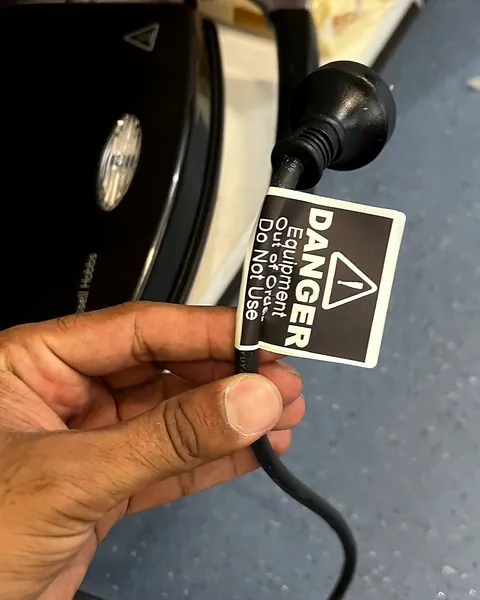
- Failed items are labelled. Anything that fails is clearly marked so nobody uses it.
- You get the register. A list of every item, its location, result and next due date.
- You know the next due date. Every tag and register entry shows it. Ask us about booking the next round.
Getting ready for a test and tag visit
A little preparation keeps the visit short and the price down:
- Gather loose items. Extension leads, power boards and chargers kept in drawers or vans are easy to miss. Put them in one place if you can.
- Tell staff. Each item is unplugged briefly. Ask staff to save their work and leave equipment accessible.
- Flag critical equipment. If something cannot be switched off during the day, such as a fridge holding medication or a server, tell us so we can plan around it.
- Send your last register. If another provider tested your equipment before, their list helps us find every item and keep the dates in sequence.
Construction sites and multiple sites
Construction sites need testing every 3 months, and regulation 163 brings in AS/NZS 3012 for electrical installations on construction and demolition sites. We can test site equipment, leads and portable RCDs on a 3-monthly round. For businesses with several sites, we keep one register per site so each location’s next due date is clear.
Who does the testing
Testing must be done by a competent person: someone with the training, qualifications or experience to carry it out safely and correctly. Work on fixed wiring, such as replacing a power point or a switchboard RCD, is electrical work and needs a registered electrical worker.
We are qualified and licensed for electrical test and tag, and our licences are held by suitably qualified personnel.
Fixed wiring work found during testing is done by our licensed electrical contractor.
Standards and service frequency in SA
| Equipment | How often | Standard | SA source |
|---|---|---|---|
| Equipment on construction sites | Every 3 months | AS/NZS 3760:2022 (guidance) and WHS Regulations 2012 (SA), regulations 150 and 163 | SafeWork SA |
| Manufacturing and commercial cleaning equipment | Every 6 months | AS/NZS 3760:2022 (guidance) and WHS Regulations 2012 (SA), regulation 150 | SafeWork SA |
| Equipment in other hostile environments | At least every 12 months | AS/NZS 3760:2022 (guidance) and WHS Regulations 2012 (SA), regulation 150 | SafeWork SA |
| Hire equipment | At each hire, and every 3 months | AS/NZS 3760:2022 (guidance) and WHS Regulations 2012 (SA), regulation 150 | SafeWork SA |
| Residual current devices (safety switches) | Tested regularly by a competent person | WHS Regulations 2012 (SA), regulations 164 and 165, and AS/NZS 3760:2022 | SafeWork SA |
Who this is for
- Construction sitesWe test and tag site electrical equipment, supply and service fire extinguishers, and help builders put emergency plans in place on Adelaide construction sites.
- Industrial and warehousesWe service the fire safety systems in Adelaide warehouses, factories and industrial sites, from extinguishers and hose reels to hydrants, sprinklers and exit lights, and test and tag the equipment on the floor.
- Commercial officesWe service the fire safety systems in Adelaide offices and commercial buildings, from extinguishers and exit lights to alarms and fire doors, and supply the records behind the owner's Form 3.
- Schools and childcareWe service the fire safety equipment in Adelaide schools, kindergartens and childcare centres, and help services prepare for the evacuation rehearsals they must run.
- Hospitality and retailWe service the fire safety equipment in Adelaide restaurants, cafés, pubs and shops, from wet chemical extinguishers and fire blankets in the kitchen to exit lights and test and tag.
- Aged careWe install and maintain the fire safety systems in Adelaide's Class 9c aged care homes, from sprinklers and monitored smoke detection to exit lighting, fire doors and extinguishers, and supply the records behind your Form 3.
- Healthcare and medicalWe service the fire safety systems in Adelaide medical centres, dental and allied health clinics and other healthcare buildings, and supply the records behind the owner's Form 3.
Certificates and reporting
Every visit ends with a written report listing each item tested, its location and result, and anything that needs attention. Building owners use it as the maintenance record behind their annual Form 3. We are qualified and authorised to carry out fire safety maintenance and sign off SA council ESP Form 2 and Form 3 maintenance documentation.
Ask us for a sample report if you want to see the format before you book.
Who does the work
- FPAS Recognised BusinessFire Protection Accreditation Scheme
- FPA Australia Bronze MemberFire Protection Association Australia
- Engineers AustraliaMember of the national body for engineers
- CBS PGE fire plumbing licenceConsumer and Business Services SA
- Licensed for electrical test and tagAS/NZS 3760 testing


All licences and certificates are held by suitably qualified personnel, and we are fully insured.
What customers say about our test and tag work
I recently used this company for fire safety and electrical compliance services and was highly satisfied. They provided high-quality fire extinguishers, blankets, and hose reels, ensuring proper installation and maintenance. Their electrical test and tag service was thorough, and exit/emergency lights were well-inspected. Smoke detectors were correctly installed and tested.
Professional, efficient, and fully compliant with safety standards. Highly recommended!
“I run a small cafe in the CBD and needed urgent fire extinguisher testing and electrical test and tag for council required ESP Form-3 in Adelaide. These guys were responsive, affordable, and gave us complete peace of mind.