What our hydrant and booster service covers
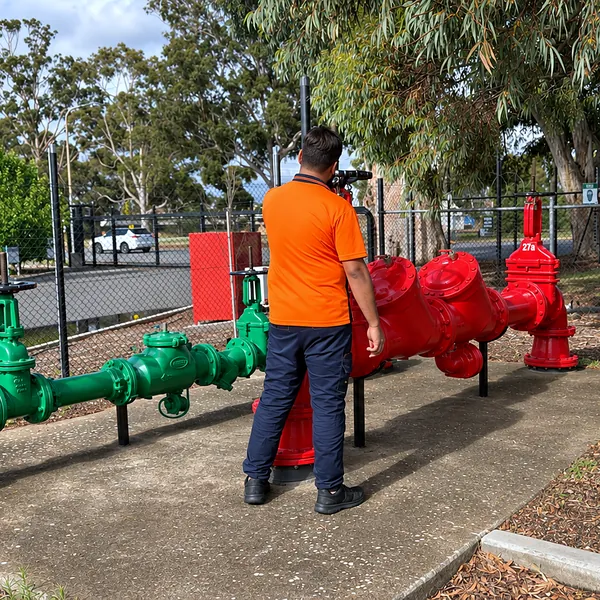
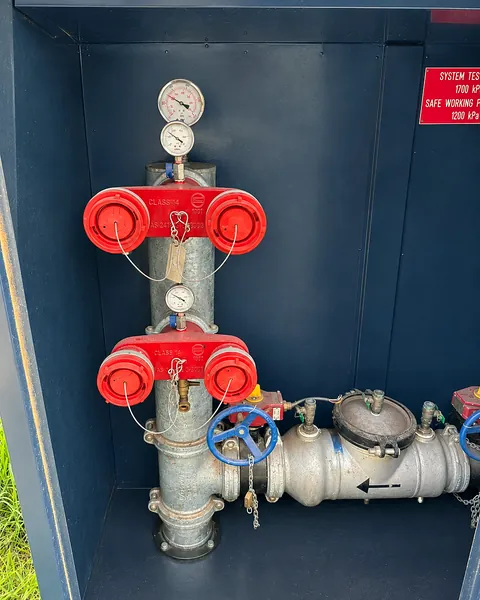
Every hydrant and booster assembly on site is checked against AS 1851-2012. Our technician inspects each hydrant valve, outlet, cap and coupling, checks for leaks, damage and corrosion, and confirms the hydrant can be reached and is signed. At the booster, they check the inlets, valves, caps, gauges and cabinet, and that the brigade can get to it from the street.
At the longer intervals AS 1851-2012 sets, the system is flow and pressure tested to confirm it can still deliver the water it was designed for. You get a written report listing every component, its result and anything that needs repair, which becomes the maintenance record behind your Form 3.
Service intervals explained
Hydrant systems have more routines than most fire equipment. South Australia’s MBS 002 (version 3, May 2023) calls up AS 1851-2012, and its hydrant routines run from monthly to 5-yearly. We set up a schedule that covers every routine for your system and record each visit for your Form 3.
Hydrant flow tests
A hydrant flow test runs water through the system at a hydrant outlet and measures flow and pressure. It shows whether the system, and the water supply behind it, can still do the job it was designed for. Results that fall short can point to a partly closed valve, a blockage, a pump problem or a change in the water supply.
Flow tests discharge a lot of water, so they are planned with you: the time, the outlet, where the water drains and who on site needs to know. If the building has a fire pump or tank, the test may involve those too, and we cover them on our fire sprinkler, tank and pump testing page. Ask us how the test will run on your site.
Who can test your hydrants
In South Australia, testing firefighting equipment connected to mains water needs a test and inspect registration from Consumer and Business Services (CBS). The categories are General, Hydrant and hose reel, and Trainee.
Hydrants also have a second requirement. Annual and longer tests on mains-connected firefighting equipment need plumbing registration as well. Hose reels are the only exception, which is why our fire hose reel testing page has slightly different rules.
We hold a CBS PGE fire plumbing licence and are FPAS accredited (Fire Protection Accreditation Scheme). Our licences are held by suitably qualified personnel. Ask us which registrations apply to the tests on your system.
Hydrant installation
We also install fire hydrant systems, often alongside the sprinkler system that shares the same water supply. We hold a CBS PGE fire plumbing licence and are FPAS accredited. Before a new building is occupied, the installer signs a Form 2 for the essential safety provisions it installed, and we are authorised to sign off ESP Form 2 documentation. Installation is quoted per project, so send us the plans and approval documents and we will quote.
Hydrants and your Form 3
If your building lodges a Form 3, the owner signs it each year to confirm the essential safety provisions have been maintained, and lodges it with council within 60 business days after the end of each calendar year. We supply the maintenance records behind it and sign the contractor section. The Form 3 stays the owner’s obligation.
Councils cite $750 expiations for not lodging or not maintaining, and up to $10,000 if prosecuted. Building Fire Safety Committees can also issue s157 notices. Small buildings exempt from lodging a Form 3 must still maintain their essential safety provisions.
Between services
Hydrants and boosters are used by the fire brigade, so the most important thing between services is access:
- Keep the booster cabinet and the path to it clear. Don’t park vehicles, skips or deliveries in front of it.
- Keep hydrants free of stock, landscaping and stored materials.
- Don’t lock a booster cabinet or hydrant enclosure in a way the brigade can’t open.
- Report damage from vehicles, leaks or missing caps straight away.
- Tell us before building works, fit-outs or changes to the site that could affect the hydrant system.
Booking your first service
If we haven’t serviced your hydrants before, send us your Form 1 schedule of essential safety provisions, your last service reports or logbook, and any site or system plans you have. Tell us who can give access to the booster, pump room and tank, and the best times for a flow test. Call 08 8151 1040 to book.
Who we service
We test hydrant systems and boosters in warehouses, factories, offices, shopping centres, schools, aged care and healthcare buildings and strata complexes across Adelaide. Hydrants, hose reels, extinguishers and other equipment can be serviced together on one plan, with one report.
Standards and service frequency in SA
| Equipment | How often | Standard | SA source |
|---|---|---|---|
| Fire hydrant systems, including booster assemblies | Monthly to 5-yearly routines | AS 1851-2012 | MBS 002 v3 (SA) |
| Who may test mains-connected hydrant systems | Every test | CBS test and inspect registration (General, Hydrant and hose reel, or Trainee) | Consumer and Business Services (CBS), SA |
| Yearly and longer hydrant tests | Yearly, and longer intervals | Plumbing registration, as well as CBS test and inspect registration | Consumer and Business Services (CBS), SA |
Who this is for
- Commercial officesWe service the fire safety systems in Adelaide offices and commercial buildings, from extinguishers and exit lights to alarms and fire doors, and supply the records behind the owner's Form 3.
- Industrial and warehousesWe service the fire safety systems in Adelaide warehouses, factories and industrial sites, from extinguishers and hose reels to hydrants, sprinklers and exit lights, and test and tag the equipment on the floor.
- Strata and apartmentsWe maintain the fire safety systems on the common property of Adelaide strata and community title buildings and supply the records the corporation needs for its annual Form 3.
- Aged careWe install and maintain the fire safety systems in Adelaide's Class 9c aged care homes, from sprinklers and monitored smoke detection to exit lighting, fire doors and extinguishers, and supply the records behind your Form 3.
- Healthcare and medicalWe service the fire safety systems in Adelaide medical centres, dental and allied health clinics and other healthcare buildings, and supply the records behind the owner's Form 3.
- Schools and childcareWe service the fire safety equipment in Adelaide schools, kindergartens and childcare centres, and help services prepare for the evacuation rehearsals they must run.
Certificates and reporting
Every visit ends with a written report listing each item tested, its location and result, and anything that needs attention. Building owners use it as the maintenance record behind their annual Form 3. We are qualified and authorised to carry out fire safety maintenance and sign off SA council ESP Form 2 and Form 3 maintenance documentation.
Ask us for a sample report if you want to see the format before you book.
Who does the work
- FPAS Recognised BusinessFire Protection Accreditation Scheme
- FPA Australia Bronze MemberFire Protection Association Australia
- Engineers AustraliaMember of the national body for engineers
- CBS PGE fire plumbing licenceConsumer and Business Services SA
- Licensed for electrical test and tagAS/NZS 3760 testing


All licences and certificates are held by suitably qualified personnel, and we are fully insured.