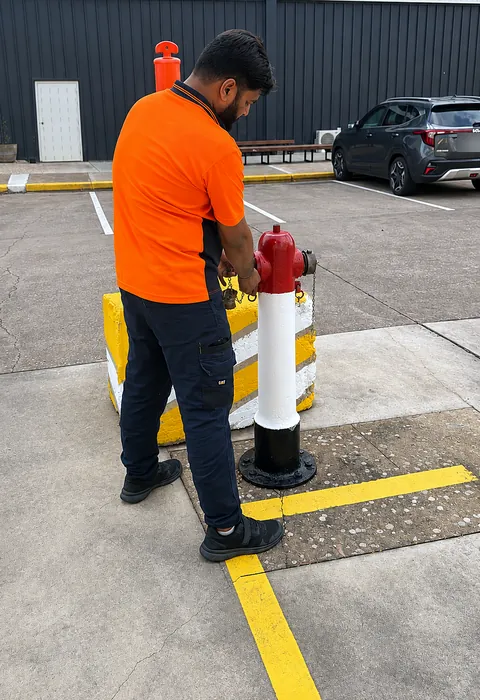
A fire hydrant inspection checks that your hydrant system, valves and booster will deliver water at full pressure when the fire brigade connects. In South Australia it’s serviced on the AS 1851-2012 schedule that MBS 002 calls up, from monthly to 5-yearly, by someone with a CBS test and inspect registration.
Hydrant systems sit quietly for years until the brigade needs them, and then they have to work first time.
What a fire hydrant system does
A fire hydrant system delivers a high-volume water supply to fixed outlets around a building or site, so firefighters can connect their hoses close to a fire rather than running lines from the street. Many systems also have a booster assembly, where the brigade’s pumping appliance connects to raise the pressure.
Because the system is designed for the brigade rather than occupants, most people never touch it. That’s why regular fire hydrant maintenance matters. A seized valve, a leaking outlet or a blocked booster can sit undetected for a long time otherwise.
How often fire hydrant inspection in Adelaide is required
South Australia’s maintenance standard is MBS 002 (version 3, May 2023). It calls up AS 1851-2012, the Australian Standard for routine service of fire protection systems, and hydrant systems are serviced on a tiered schedule running from monthly to 5-yearly.
- Frequent and 6-monthly servicing of the hydrant valves and booster assembly catches obvious faults early.
- Annual and longer-interval tests, up to 5-yearly, check the system more thoroughly. CBS gives 3-yearly hydrant testing as one example of these longer tests.
Your building’s Form 1, the schedule of essential safety provisions issued by council or the relevant authority, lists which ESPs your building has and the maintenance each needs. If you’re arranging hydrant testing, it’s the flow and pressure results that give you confidence. A visual once-over won’t.
Who can test fire hydrants in SA
Hydrant testing is licensed work in South Australia. According to Consumer and Business Services, testing firefighting equipment connected to mains water needs a CBS test and inspect registration: General, Hydrant and hose reel, or Trainee (under direct supervision). The Hydrant and hose reel registration covers testing hydrant valves and booster assemblies at intervals of up to 6 months. Annual and longer tests on hydrants need a plumbing registration that covers the work.
Ask any contractor for their CBS registration before they test your system. VD Fire & Electrical holds a CBS PGE fire plumbing licence and is FPAS accredited (Fire Protection Accreditation Scheme). Ask us which registrations apply to the tests on your system.
What fire hydrant testing involves
A hydrant service works through the system end to end:
- Inspecting hydrant valves, outlets and any booster assembly for damage, corrosion or leaks.
- Checking gauges, isolation valves and pump connections where fitted.
- Operating valves to make sure they’re not seized and that they seal properly.
- Flow and pressure testing at the intervals that call for it, to confirm the supply meets its required performance.
- Checking hydrant signage, booster signage and block plans.
- Recording results, flagging any repairs and updating the service records.
On larger sites, the fire pump and water storage tank have their own AS 1851 schedules. See our guide to fire tank and sprinkler inspections.
Compliance requirements and standards
AS 1851-2012 sets the servicing regime, through MBS 002, and AS 2419.1 covers the design and installation of hydrant systems, as the National Construction Code requires. The building’s approval documents and Form 1 set out whether hydrants are required in the first place.
Hydrants are essential safety provisions, so the records feed the owner’s annual Form 3. Unless the building is exempt, the owner lodges it with council within 60 business days after the end of each calendar year. Not lodging or not maintaining ESPs carries a $750 expiation and a maximum penalty of $10,000 under regulation 94 of the Planning, Development and Infrastructure (General) Regulations 2017. Building Fire Safety Committees can also issue section 157 notices requiring work on a building.
Letting hydrant servicing lapse can also complicate an insurance claim. And if a system underperforms in a real fire, the consequences are far more serious than a compliance note. That’s why the intervals exist.
Signs your hydrant system needs attention sooner
Between scheduled services, report it for a check if you notice:
- Visible rust, corrosion or damage on hydrant outlets, valves or the booster assembly.
- Water pooling, leaks or damp patches around hydrant points or pipework.
- Missing, damaged or painted-over hydrant signage and block plans.
- A booster or hydrant point that’s been blocked, built over, or is hard to reach.
- A missing cap or a booster cabinet that won’t open.
Access issues are especially worth fixing fast. A hydrant the brigade can’t reach quickly defeats the purpose.
A hydrant system is only as good as its last test. Keep the inspections on schedule and you’ll know it works. To book hydrant and booster testing, call VD Fire & Electrical on 08 8151 1040 or request a quote. Where a building has internal hydrants, the NCC generally calls for hose reels too. See our guide to fire hose reel maintenance.