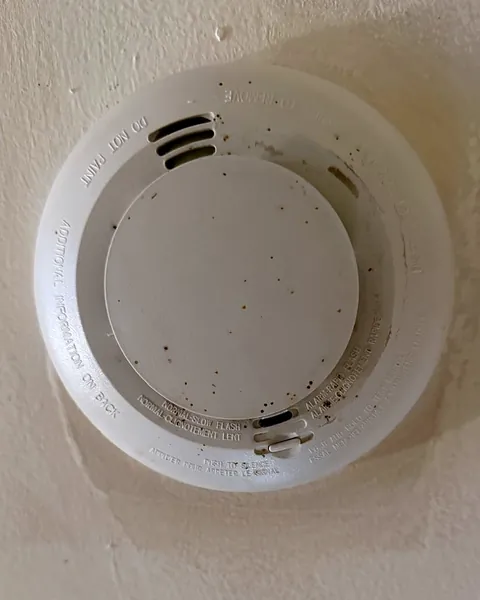
A smoke alarm that chirps once every 40 seconds to a minute, with its red light flashing at the same moment, is telling you its battery is low. Change the battery, or replace the alarm if the battery is sealed in, and the chirp should stop. If it doesn’t, one of a few other causes is usually to blame, and each has a safe fix.
Is it a chirp or a real alarm?
A chirp is a single short beep that repeats at a steady interval. A real alarm is a loud, continuous siren. If the siren is going, check for smoke or fire first. If there is any sign of fire, get everyone out and call Triple Zero (000). Don’t stop to work out which alarm went off.
Why is my smoke alarm chirping?
Manufacturers of alarms sold in Australia list the same handful of causes.
- Low battery. This is the most common one. The exact interval depends on the brand: about once a minute for Quell, every 48 seconds for Red and every 40 seconds for Brooks alarms with a 9-volt backup. The warning usually runs for at least 30 days, so it’s worth acting on the first night you hear it.
- A sealed 10-year battery running down. Alarms with a non-removable lithium battery give the same chirp when the battery is near the end. The battery can’t be changed, so the whole alarm is replaced (Brooks).
- The alarm remembers an old fault. Some alarms hold the low battery warning even after a new battery goes in, and need a manual reset (Quell).
- Dust or insects in the chamber. Clipsal says dust inside the alarm can cause a continuous beep, and recommends vacuuming with a soft brush attachment.
- A damaged battery clip. Brooks warns that a damaged clip or wires can cause constant beeping, and the alarm then needs replacing.
- End of life. Smoke alarms wear out. The MFS says older alarms may malfunction or stop working altogether.
How do I stop a smoke alarm chirping safely?
- Find the right alarm. Stand under each one and wait for the chirp. The alarm at fault usually flashes its red light at the same moment it chirps.
- Work out how it’s powered. A steady green light means it’s a hardwired 240 V alarm. No green light usually means a battery alarm, either with a replaceable 9-volt battery or a sealed 10-year battery. The label on the alarm says which.
- Fit a new battery, or replace a sealed alarm. Use the battery type listed in the instructions. Our step by step guide to changing a smoke alarm battery covers each type.
- Test it. Press and hold the test button until the alarm sounds. If it still chirps, take the battery out, hold the test button for at least 15 seconds, refit the battery and test again (Quell).
- Clean it. Vacuum the vents with the soft brush attachment, then test again (MFS servicing schedule).
- Replace it if nothing works. An alarm that keeps chirping after a new battery and a clean, or doesn’t sound when tested, should be replaced (Quell).
Use a stable step ladder rather than a chair, and never leave an alarm without a battery or take it down to stop the noise. The hush button is meant to quieten a nuisance alarm from something like burnt toast for about 10 minutes (Brooks). It won’t fix a low battery.
Why is my hardwired smoke alarm beeping?
Hardwired alarms run on 240 V power with a battery backup, so a chirp usually points to one of three things.
- The backup battery is low. If the alarm takes a 9-volt backup battery, it needs changing just like a battery alarm. The MFS says these backup batteries should be changed every year.
- The power is off. If the green light is out, the alarm isn’t getting mains power and is running down its backup battery. Check your switchboard for a tripped circuit breaker. If you’re not sure what you’re looking at, call a licensed electrician (Brooks).
- It’s recharging after a blackout. Alarms with a sealed rechargeable backup can chirp for a few hours after the power comes back, until the battery recharges (Brooks).
You can change a backup battery yourself by following the maker’s instructions, which usually start with switching off the alarm’s power. Never undo the base or touch the wiring. In South Australia, a qualified electrician must install hardwired alarms, and replacing one is electrical work that needs an electronic Certificate of Compliance.
When should a smoke alarm be replaced?
Replace every smoke alarm at least every 10 years, whatever its power source. The MFS says all smoke alarms that comply with AS 3786 have a recommended service life of 10 years, after which dust, insects and corrosion can stop them working properly. Look for the manufacture or “replace by” date printed on the back or side of the alarm.
Replace it sooner if it fails its test with a fresh battery, keeps chirping after you’ve worked through the steps above, or has been painted over. When you replace an alarm, the MFS recommends photoelectric alarms that are hardwired and interconnected, so every alarm sounds when one does. Our guides to photoelectric and ionisation alarms and interconnected smoke alarms in SA explain why.
If your home was built from 1 January 1995, South Australian law requires hardwired alarms, so a replacement needs an electrician. Landlords can find the full set of rules in our guide to smoke alarm rules for SA landlords.
How do I stop it happening again?
The MFS gives a simple routine for homes.
- Press the test button once a month, and after you’ve been away.
- Vacuum the outside of each alarm at least every 6 months, then test it.
- Change replaceable batteries, including 9-volt backups in hardwired alarms, once a year. The MFS suggests doing it when the clocks go back at the end of daylight saving.
- Replace each alarm at 10 years.
If you’d rather not climb ladders, VD Fire & Electrical offers annual smoke alarm testing from $89 + GST per property across Adelaide, and hardwired replacements are done by our licensed electrical contractor.